How We Work:
From Discovery to
Domination.
A transparent look at the engineering methodology we use to deliver predictable growth for Mumbai businesses.
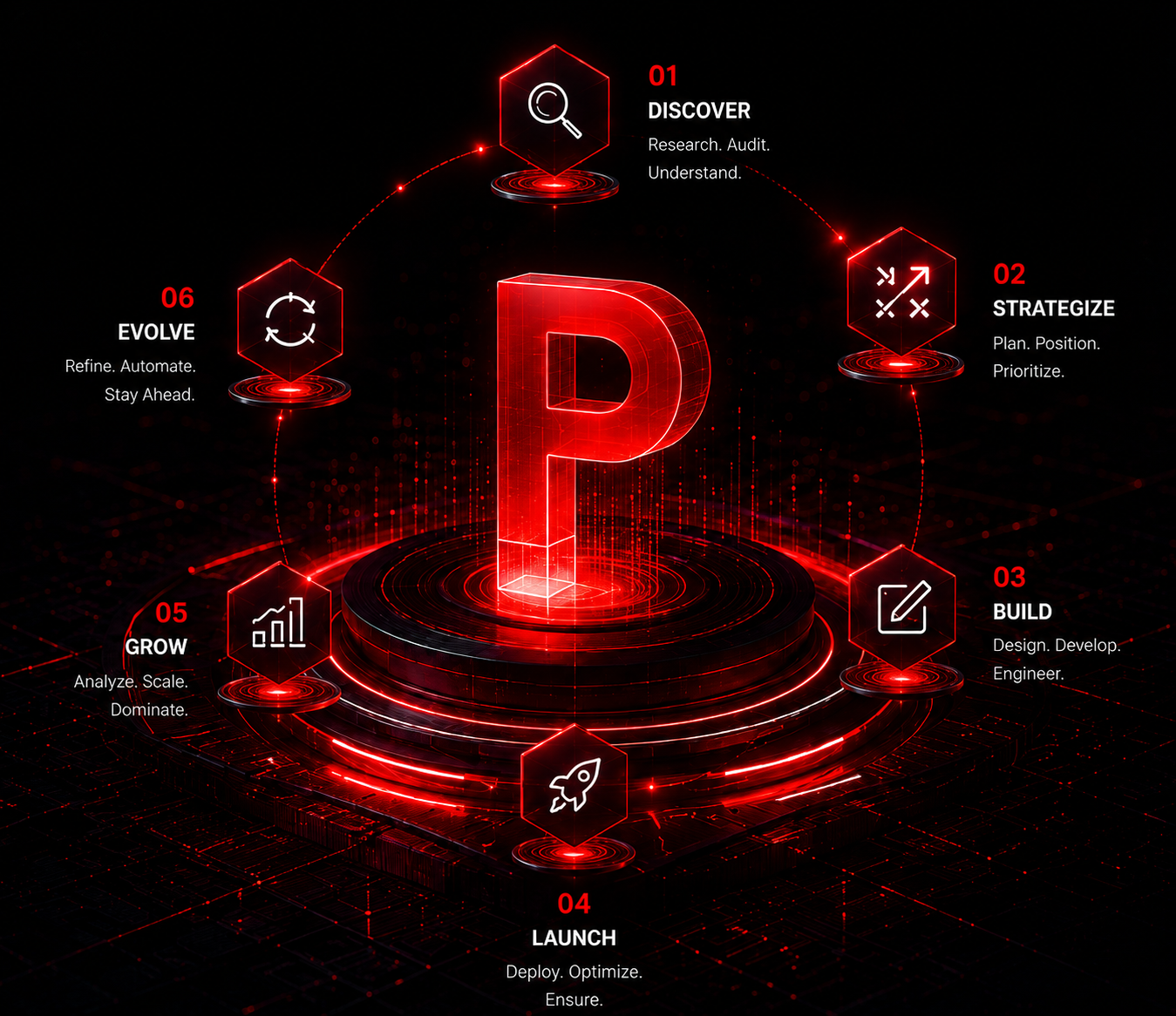
Discovery & Audit
We don't guess. We start by mapping your current digital state, auditing your technical debt, and aligning on your exact revenue goals. We analyze your competitors and identify exactly where you are losing market share.
Strategy & Architecture
Before a single line of code is written, we design your entity structure, map out the sitemap, and define the conversion funnels required to beat competitors. This is the blueprint for your digital authority.
Engineering & Build
Our engineers construct the infrastructure. We write clean, semantic HTML, implement deep JSON-LD schema markup, and ensure perfect Core Web Vitals so Google and AI engines can instantly parse your value.
Optimize & Integrate
We integrate your CRM, set up marketing automation (WhatsApp/Email), and deploy the initial SEO and GEO payloads. We ensure every lead is captured, tracked, and routed perfectly.
Scale & Dominate
Post-launch, we transition into growth mode. We run continuous A/B testing, expand topical clusters, and build deep authority to aggressively capture market share from your competitors.
What You Actually Get
A Lightning-Fast Platform
Perfectly engineered code that loads instantly and passes all Core Web Vitals natively, ensuring Google favors your site in rankings.
Search Authority
Not just keywords, but deep semantic relevance and schema structures that make you the logical answer for modern AI engines.
Automated Workflows
Systems that capture, nurture, and route leads automatically while you sleep. Stop letting valuable prospects slip through the cracks.
Predictable ROI
Everything is tracked. Every decision is data-driven. You know exactly what your investment yields month over month with granular reporting.
Perceptra's Process
Detailed Breakdown & Extensions
Complete Process Overview
Our end-to-end process transforms your business from awareness to growth at scale. Here's the detailed breakdown of each phase, what happens in it, and the outcomes you can expect.
Phase 1: Discovery & Audit
Duration: Week 1-2
Investment: Included in project kickoff
Deliverables: Business audit, competitive analysis, roadmap document
What Happens
We deeply understand your business, market, and goals before recommending any solutions. This isn't a superficial consultation-it's a forensic analysis.
Step 1.1: Business Assessment
- Founder/Leader Interview (2 hours)
- Customer Interviews (if applicable)
- Financial Review
Step 1.2: Market & Competitive Analysis
- Market Research
- Competitor Mapping (top 5-10 competitors)
- ICP (Ideal Customer Profile) Definition
Step 1.3: Technical Audit
- Website Performance
- SEO Audit
- Architecture Review
Deliverables from Phase 1
1. Business Audit Report (20-30 pages)
- Executive summary
- Current state assessment
- Strengths, weaknesses, opportunities, threats (SWOT)
- Customer acquisition analysis
- Revenue opportunity analysis
- Recommended focus areas
2. Competitive Intelligence Report (15-20 pages)
- Competitor benchmarking matrix
- Gap analysis (where you compare vs. competitors)
- Digital strategy recommendations
- Quick wins and priority actions
3. 12-Month Roadmap (visual + text)
- Phase-by-phase breakdown
- Key milestones and timelines
- Expected outcomes and metrics
- Investment requirements
4. ICP & Buyer Persona Documents
- Detailed customer profiles (2-3 personas)
- Customer journey mapping
- Decision-making process and objections
- Messaging framework aligned to each persona
Outcome of Phase 1
→ Clarity: You understand exactly what's working, what's broken, and why
→ Strategy alignment: We agree on priorities and focus areas
→ Confidence: You're making decisions from data, not gut feeling
→ Roadmap: A clear 12-month growth plan
Phase 2: Strategy & Planning
Duration: Week 2-4
Investment: Strategy sessions, research, planning
Deliverables: Digital strategy document, content calendar, implementation timeline
What Happens
We design the blueprint for growth. This isn't generic advice-it's a custom strategy built on your audit findings.
Step 2.1: Strategy Development
SEO & Content Strategy (if applicable)
- Keyword research: 500-1000+ keywords across funnel (awareness ? consideration ? decision)
- Content gap analysis: What content competitors have that you're missing
- Content pillars: 5-7 main topic clusters around your offerings
- Content calendar: 12-month plan (blog, guides, case studies, videos)
- Internal linking strategy: How content connects and builds authority
Digital Marketing Strategy
- Channel selection: Where should you focus (Google Ads, Facebook, LinkedIn, organic)?
- Budget allocation: Recommended spend by channel (percentage of total marketing budget)
- Campaign structure: Campaign themes, targeting, messaging for each quarter
- Funnel optimization: Where are biggest drop-offs? What experiments to run?
Brand & Positioning Strategy
- Unique value proposition refinement
- Messaging framework (hero, benefit, proof, CTA)
- Tone of voice guidelines
- Visual identity guidelines (if website redesign is in scope)
CRM & Automation Strategy (if applicable)
- Lead capture points: Where and how to capture leads
- Lead scoring: Hot vs. warm vs. cold, nurture vs. sales-ready
- Automation workflows: Email sequences, SMS sequences, retargeting
- Sales process: How leads move from acquisition ? conversion
Step 2.2: Goal Setting & KPI Definition
SMART Goals
- Revenue goals (e.g., "?5L/month from digital by month 12")
- Traffic goals (e.g., "10,000 monthly organic visits by month 6")
- Lead goals (e.g., "100 qualified leads/month from website")
- Customer goals (e.g., "50 new customers/month from digital")
Key Performance Indicators (KPIs)
- Traffic metrics (organic, paid, referral, direct)
- Conversion metrics (lead conversion rate, sales conversion rate)
- Customer acquisition cost (CAC) and lifetime value (LTV)
- Marketing ROI by channel
- Brand metrics (NPS, social sentiment, market share)
Baseline & Targets
- Current state (month 0): Where you are today
- Targets (month 3, 6, 12): Where you want to be
- Stretch goals: Aspirational targets if everything goes perfectly
Step 2.3: Planning & Sequencing
Phased Roadmap
- Months 1-2: Foundation (fix technical issues, build infrastructure)
- Months 3-4: Launch & amplify (publish content, run initial ads)
- Months 5-6: Optimize (A/B test, improve conversion rate)
- Months 7-12: Scale (double down on what works, expand channels)
Resource Planning
- Internal resources needed (time from your team)
- External resources (our team, subcontractors, tools)
- Budget allocation (software, ads, content creation, tools)
Risk Assessment
- What could go wrong? (market changes, competition, budget constraints)
- Mitigation strategies for each risk
- Contingency plans if milestones slip
Deliverables from Phase 2
1. Digital Strategy Document (30-50 pages)
- Executive summary
- Goals and KPIs
- Competitive positioning
- Customer journey mapping
- SEO strategy (if applicable)
- Content strategy and calendar (first 6 months)
- Paid advertising strategy (if applicable)
- Email/SMS marketing strategy
- CRM and automation workflows
2. Content Calendar (visual spreadsheet)
- 12-month content plan
- Topic, format, publication date, owner for each piece
- Internal linking recommendations
- Keyword targets
- SEO metadata (title, description)
3. Implementation Roadmap (visual + Gantt chart)
- Phase-by-phase breakdown
- Timelines and dependencies
- Team member assignments
- Deliverables at each milestone
4. Success Metrics Dashboard Template
- KPIs to track
- Frequency of measurement (weekly, monthly, quarterly)
- Baseline and targets
- Tools and setup required
Outcome of Phase 2
→ Alignment: Your team and our team agree on direction and priorities
→ Clarity: Everyone knows what success looks like
→ Efficiency: No wasted effort on low-impact activities
→ Measurability: You can track progress scientifically
Phase 3: Build & Implementation
Duration: Week 4-16 (varies by project scope)
Investment: Active development and content creation
Deliverables: Website, content, campaigns, systems, training
What Happens
We execute the plan. This is where strategy becomes tangible: websites, content, campaigns, automations come to life.
Step 3.1: Website/Platform Development (if applicable)
Discovery & Design (Week 4-6)
- Wireframes (layout, user flow, information architecture)
- Design mockups (visual design in Figma or similar)
- Your feedback and revisions (2-3 rounds)
- Design approval and sign-off
Development (Week 7-12)
- Frontend development (HTML, CSS, React/Vue if needed)
- Backend development (APIs, databases, integrations)
- CMS setup (if applicable: WordPress, Webflow, custom)
- Testing (functionality, performance, security, mobile)
- Deployment to staging (test environment)
- Your QA testing and feedback
- Deployment to production (live)
Post-Launch
- Performance monitoring
- Bug fixes and optimization
- Analytics setup and verification
- Security hardening
Step 3.2: Content Creation & Publishing
Blog Content (if SEO strategy in Phase 2)
- Research phase: Keyword research, competitor content analysis
- Content creation: 2,000-3,000 word blog posts per topic
- Editing & optimization: SEO optimization, readability, flow
- Design & imagery: Custom graphics, stock photos, formatting
- Publishing: WordPress/CMS integration, metadata, internal links
- Pace: 2-4 articles per month (varies by plan)
Website Copy
- Homepage, service pages, about page, contact page
- Value proposition and messaging optimization
- Call-to-action (CTA) copy testing
- FAQ and objection-handling content
Email Content (if email marketing in strategy)
- Welcome sequence (5-7 emails)
- Educational sequences (by topic)
- Promotional sequences
- Nurture sequences for leads
- Re-engagement campaigns
Video Content (if applicable)
- Script writing
- Recording (or sourcing stock footage)
- Editing and optimization
- Subtitles and accessibility
- Platform optimization (YouTube, social, website)
Step 3.3: Campaign Setup & Automation
Google Ads Setup (if paid advertising in strategy)
- Account structure (campaigns, ad groups)
- Keyword strategy and negative keywords
- Ad copy variations (A/B testing)
- Landing page optimization
- Conversion tracking
- Budget allocation
Social Media Setup
- Profile optimization (LinkedIn, Facebook, Instagram, TikTok)
- Content calendar scheduling (using Buffer, Later, or similar)
- Hashtag strategy
- Engagement workflow
- Community management guidelines
Email & SMS Automation
- Email platform setup (ConvertKit, HubSpot, Klaviyo)
- Automation workflows (trigger-based sequences)
- Segmentation setup
- Template design
- Compliance (GDPR, CAN-SPAM, India's email law)
CRM & Lead Management (if applicable)
- CRM platform setup (HubSpot, Salesforce, Pipedrive)
- Lead capture forms and integrations
- Lead scoring logic
- Workflow automation (notifications, task assignment)
- Reporting and analytics
Step 3.4: Team Training & Handover
Knowledge Transfer Sessions
- Website/CMS training (how to update, publish, manage)
- Email/SMS marketing training (how to send campaigns)
- Analytics training (how to read dashboards, interpret data)
- Ad management training (how to adjust budgets, pause campaigns)
- CRM training (how to manage leads, update opportunities)
Documentation
- Written guides for every system
- Video tutorials (screen recordings)
- FAQ for common questions
- Troubleshooting guide
Deliverables from Phase 3
→ Website/Platform - fully functional, optimized, mobile-responsive
→ Content Library - 20-40 pieces (blog articles, guides, videos)
→ Advertising Campaigns - Google Ads, Facebook Ads, LinkedIn Ads set up
→ Email Sequences - welcome, nurture, promotional flows
→ CRM System - integrated with lead capture and automation
→ Team Training - documentation and live training sessions
Outcome of Phase 3
→ Infrastructure: You have a modern digital platform in place
→ Content: 6+ months of content ready to go
→ Campaigns: Ads and automation running automatically
→ Ownership: Your team knows how to manage everything
Phase 4: Optimize & Iterate
Duration: Week 16-32 (Months 4-8, ongoing)
Investment: Testing, analysis, optimization cycles
Deliverables: Performance reports, recommendations, optimizations
What Happens
The real growth happens here. We track every metric, identify what's working, optimize relentlessly, and kill what's not working.
Step 4.1: Performance Monitoring & Analysis
Weekly Monitoring
- Website traffic (organic, paid, referral, direct)
- Conversion rates (visitor ? lead, lead ? customer)
- Campaign performance (CTR, CPC, ROAS)
- Email metrics (open rate, click rate, conversion)
- Social metrics (reach, engagement, follower growth)
Monthly Deep Dives
- Content performance analysis (which articles drive conversions?)
- Funnel analysis (where do people drop off?)
- Cohort analysis (which traffic source brings best customers?)
- Competitive benchmarking (how are we vs. competitors?)
Quarterly Reviews
- Progress vs. goals (hitting targets or falling short?)
- ROI analysis (revenue generated per dollar spent)
- Customer quality analysis (are we attracting ideal customers?)
- Market changes (any new competitors, trends, opportunities?)
Step 4.2: A/B Testing & Experimentation
Website Experiments
- Homepage headline testing (which resonates more?)
- CTA button color, text, placement
- Landing page layout variations
- Form field optimization (fewer fields = more signups)
- Value proposition messaging tests
Email Experiments
- Subject line testing (what gets higher open rates?)
- Send time optimization (when do people open?)
- CTA testing (which call-to-action converts best?)
- Segmentation testing (personalized emails vs. generic)
- Frequency testing (how often should we send?)
Paid Ads Experiments
- Ad copy variations (different value propositions)
- Landing page variations (specific vs. generic)
- Audience targeting (broad vs. narrow, different interests)
- Budget allocation (which channels give best ROI?)
- Bid strategy optimization (manual vs. automated)
Content Experiments
- Format testing (blog vs. video vs. infographic, which gets more engagement?)
- Length testing (long-form vs. short-form)
- Topic testing (which topics resonate with audience?)
- Publishing frequency (daily vs. weekly, what sticks?)
Step 4.3: Optimization Recommendations
Based on data, we recommend and implement:
Quick Wins (implement immediately)
- Fix broken links or slow pages
- Update meta titles/descriptions (low-hanging SEO fruit)
- Pause underperforming ad campaigns (save money)
- Optimize email send times
Medium-Term Improvements (implement over 4-8 weeks)
- Redesign underperforming pages
- Create new content on high-intent keywords
- Expand top-performing ad campaigns
- Build new automation workflows
Strategic Pivots (if data suggests)
- Shift ad spend from low-ROI to high-ROI channels
- Pivot positioning based on customer feedback
- Expand into new markets if data supports
- Double down on best-performing offerings
Deliverables from Phase 4
1. Monthly Performance Reports (delivered by 5th of each month)
- Traffic summary (by source, trend)
- Conversion metrics (lead volume, lead quality)
- Revenue attribution (which channel brought revenue?)
- Top and bottom performers (what's working and what's not)
- Recommendations for next month
2. Quarterly Business Review (delivered quarterly)
- Progress vs. goals (are we on track?)
- ROI analysis (revenue per dollar spent)
- Competitive benchmarking
- Strategic recommendations
- Updated roadmap for next quarter
3. A/B Testing Results
- Test hypothesis and outcome
- Winning variation
- Lift/improvement percentage
- Statistical significance
- Implementation plan
4. Updated Dashboards & Analytics
- Real-time performance dashboards
- Custom reports tailored to your KPIs
- Automated alerts (when metrics change significantly)
Outcome of Phase 4
→ Continuous Improvement: Marginal gains compound to significant growth
→ Data-Driven Decisions: You're not guessing, you're testing and learning
→ Efficiency: Cutting waste, doubling down on what works
→ Momentum: Early wins building confidence for bigger bets
Phase 5: Scale & Growth
Duration: Month 9-12 and beyond
Investment: Reinvesting profits into proven channels
Deliverables: Expanded campaigns, new markets, revenue growth
What Happens
Once we've proven what works, we scale it. 2x the ad spend on the top-performing channel. Expand into new markets. Launch new products. This is where compound growth accelerates.
Step 5.1: Channel Expansion
Double Down on Winners
- Top-performing paid advertising channel ? increase budget 50-100%
- Best-performing content topics ? publish 2x more in that topic area
- Highest-converting pages ? build similar pages for similar problems
- Best-performing email segment ? create specialized content for that segment
Expand into New Channels
- If organic search successful ? expand to new keywords, new markets, new languages
- If paid ads successful ? expand to new platforms (Google Ads ? Facebook ? LinkedIn)
- If email successful ? layer in SMS for faster communication
- If content successful ? create video versions, podcast episodes
Geographic/Market Expansion
- If successful in one city ? expand to neighboring cities with same playbook
- If successful in one industry vertical ? adapt playbook for adjacent vertical
- If B2B successful ? test B2C, or vice versa
Step 5.2: Offer & Product Expansion
Upsell & Cross-Sell
- New tiers of your core offering (basic ? premium ? enterprise)
- Complementary products (if you sell X, sell related Y)
- Upgrade paths (convert monthly customers to annual)
- Bundle pricing (sell multiple products together)
New Markets
- Different industries that have same problem
- Different company sizes (SMB vs. enterprise)
- Different geographies
- Different customer segments
Step 5.3: Team & Infrastructure Scaling
Hiring & Outsourcing
- Hire customer success manager (if you've grown to 50+ customers)
- Hire marketing specialist (to manage your growing channels)
- Hire operations person (to handle the logistics)
- Outsource or automate repetitive tasks
Systems & Automation
- Implement systems to handle 10x the volume
- Automate what can be automated (let software do rote work)
- Document processes so they can be delegated
- Build team playbooks and guidelines
Quality & Delivery
- Don't sacrifice quality while scaling
- Maintain customer satisfaction (NPS should stay high or increase)
- Build feedback loops to catch quality issues early
- Invest in training as you grow
Step 5.4: Long-Term Strategy
Reinvestment Strategy
- What percentage of revenue goes back into marketing?
- Which channels deserve more investment?
- What new markets should we enter?
- Should we acquire competitors or build new offerings?
Competitive Moat
- How do we stay ahead of competition?
- What proprietary processes or data do we have?
- How do we build switching costs (make it hard for customers to leave)?
- What's our unfair advantage?
Sustainability & Values
- Are we profitable at this scale?
- Is our growth sustainable (not burning cash)?
- Are we staying true to our values and mission?
- What does success look like in 3-5 years?
Deliverables from Phase 5
→ Expanded Marketing Campaigns - larger budgets, more channels
→ New Product Launches (if applicable)
→ Geographic Expansion Plans - playbook for new markets
→ Staffing & Infrastructure Plan - how to handle growth
→ 3-Year Strategic Plan - long-term vision and roadmap
→ Competitive Positioning - how you stay ahead
Outcome of Phase 5
→ Exponential Growth: You're not just growing, you're compounding
→ Market Leadership: You're the go-to player in your space
→ Profitability: Growth is profitable, not just fast
→ Sustainability: You've built systems that can scale without you
→ Vision: You know where you're going for next 3-5 years
Beyond Phase 5: Ongoing Partnership
Continuous Optimization
We never stop optimizing. Every quarter, we review performance, test new ideas, and refine strategy based on market changes.Market Adaptation
Markets evolve. Competitors emerge. Consumer behavior shifts. We help you stay ahead of these changes by:- Monitoring trends in your industry
- Testing new channels before they're mainstream
- Adapting your messaging as competition changes
- Pivoting when the data suggests new opportunities
Team Evolution
As you grow, your marketing needs evolve. We help you:- Build an in-house marketing team (if that's your goal)
- Transition from agency support to internal ownership
- Mentor your team on best practices
- Maintain high standards as you scale
Innovation & Experimentation
We allocate 10-15% of marketing budget to experiments:- New channels (try emerging platforms early)
- New tactics (test new content formats, ad approaches)
- New markets (test new geographies, industries, customer segments)
- New products (A/B test new offerings)
The Perceptra Difference
Transparency
Every step is transparent. You have access to:- Live analytics dashboards (real-time data)
- Regular status reports (weekly, monthly, quarterly)
- Direct communication with your account manager
- Full documentation and processes
Accountability
We're accountable for results. Our compensation is tied to:- Meeting agreed-upon KPIs
- Delivering on promised timelines
- Quality of work and recommendations
- Your satisfaction (NPS)
Partnership Mentality
We don't just execute-we partner with you. We:- Understand your business as well as you do
- Make recommendations we'd make for our own company
- Say no when something isn't right for you
- Push you when we think you can do better
Long-Term Thinking
We optimize for your long-term success, not quick wins. We:- Build sustainable growth, not flash-in-the-pan campaigns
- Invest in brand authority, not just one-time sales
- Create systems and processes you own
- Mentor your team to eventually run marketing independently
The 12-Month Journey
Getting Started
Ready to begin your growth journey? Here's what happens next:
- Discuss your business, goals, and challenges
- No pressure, no pitch-just a conversation
- Tailored strategy recommendations
- Investment breakdown
- Timeline and deliverables
- Formal agreement signed
- Deposit payment due
- Deep dive discovery phase begins
- Every month, we review progress
- Adjust strategy based on data
- Plan next month's priorities
Discuss your business, goals, and challenges
No pressure, no pitch-just a conversation
Tailored strategy recommendations
Investment breakdown
Timeline and deliverables
Formal agreement signed
Deposit payment due
Deep dive discovery phase begins
Adjust strategy based on data
Plan next month's priorities
Ready to start Step 1?
Book a strategy session and let's build your growth engine.